For bird lovers in Maharashtra, Bhigwan is one of those places that keeps drawing you back. About 100 kilometres from Pune, the landscape around Bhigwan combines the vast backwaters of the Ujani reservoir with open grasslands, scrub and agricultural fields. This meeting of very different habitats is what makes the area so rewarding: you can spend the morning watching flamingos and waterbirds from a boat, and a few hours later be scanning the grasslands for harriers, eagles, larks and owls.
More Than Just Flamingos
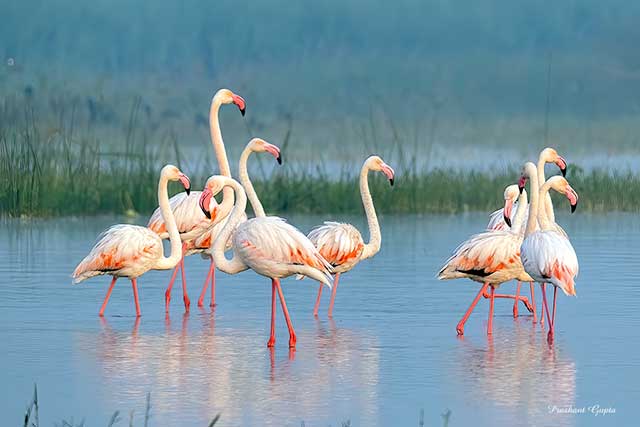
Bhigwan has become almost synonymous with Greater Flamingos. During favourable winter seasons, impressive flocks gather in the shallow waters of the Ujani backwaters, creating one of the most memorable birding spectacles within easy reach of Pune.
But to think of Bhigwan only as a flamingo destination would be to miss much of its charm.
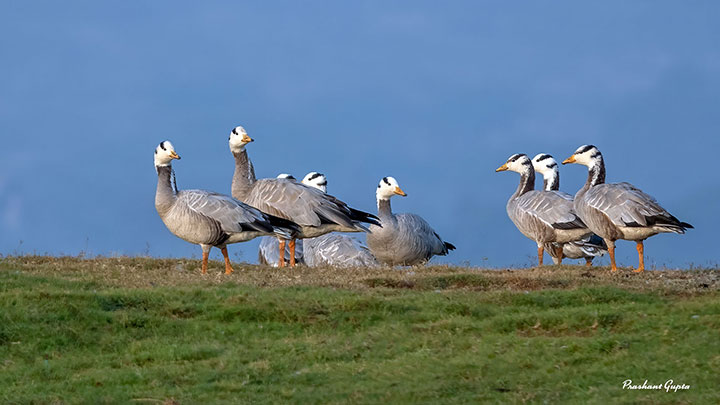
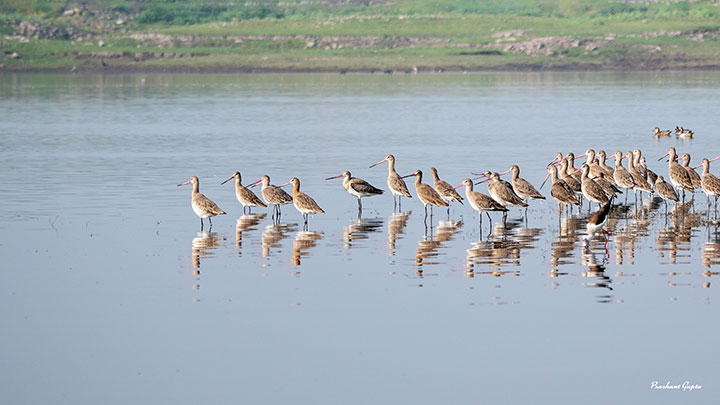
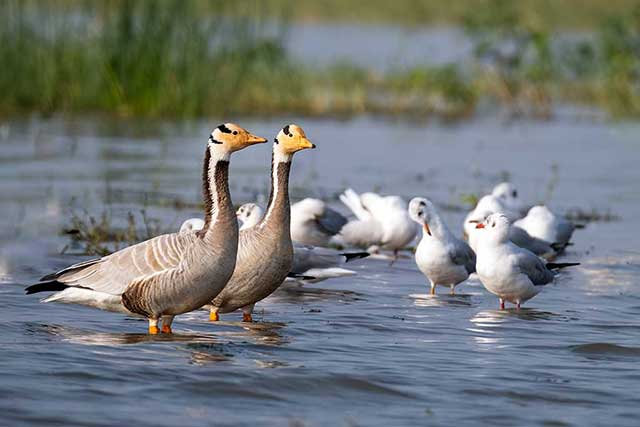
The changing water levels create mudflats, shallow pools, exposed banks and patches of aquatic vegetation. These provide feeding and resting areas for ducks, waders, herons, egrets, ibises and storks. The wider Bhigwan landscape also includes farmland, scrub and grassland, greatly increasing the diversity of birds that can be encountered. Recent surveys continue to underline the importance of this combination of wetland and terrestrial habitats for both resident and migratory birds.
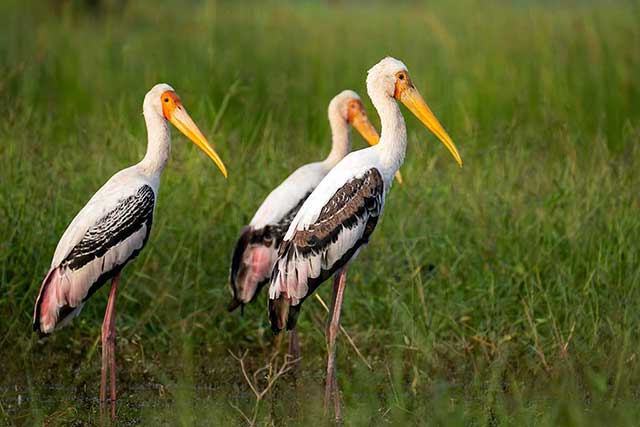
A morning on the water may reveal painted storks, ibises, spoonbills, herons, egrets, ducks, terns and waders. Scan the skies carefully and you may also notice a raptor circling high overhead.
And then there are the flamingos.
From a distance, a flock can initially look like a pale band floating above the water. As the boat approaches slowly, individual birds begin to emerge—long necks sweeping through the shallows, bills submerged while feeding and occasional bursts of pink and black when a bird stretches its wings.
When an entire group suddenly takes flight, Bhigwan becomes unforgettable.
The Boat Ride: Birding at Water Level
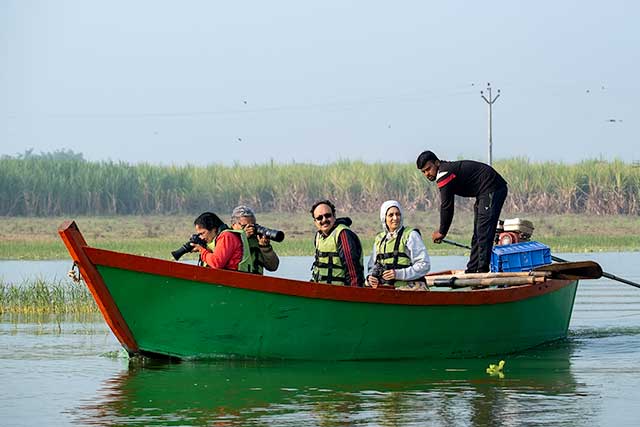
One of the best ways of experiencing Bhigwan is by taking a small local boat into the backwaters, particularly around the Kumbhargaon and Diksal areas, both well-known birding zones.
The attraction of the boat is not simply that it gets you closer to birds. It changes your perspective.
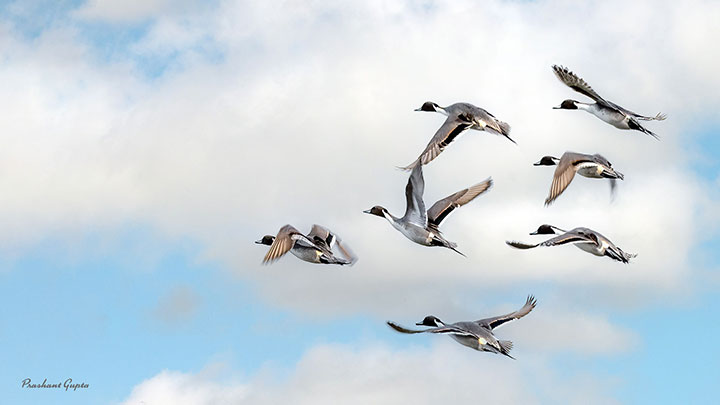
From close to water level, even common species become fascinating. A heron standing motionless against shimmering water, a flock of ducks lifting simultaneously from the surface, or a flamingo reflected perfectly in still morning water can produce wonderful observations—and photographs.
Early mornings are especially beautiful. The water can be almost mirror-like before the wind rises, while the low sun gives the birds warm directional light.
For photographers, this is often the magic hour.
But patience matters more than proximity. There is rarely any reason to chase birds. Allowing the boatman to approach slowly and keeping a respectful distance generally produces better behaviour, better backgrounds and ultimately better photographs.
Sometimes the most satisfying image is not a close portrait at all. A line of flamingos against an enormous expanse of water can tell a far stronger story about Bhigwan.
Then Leave the Water Behind
What makes a birding trip to Bhigwan particularly interesting is what happens when you step out of the boat.
The surrounding grasslands and scrubland are a completely different world.
Here the visual palette changes from blues and reflections to dry grasses, earth tones and enormous skies. Waterbirds give way to birds adapted to open country.
This is where birding becomes slower and more observational.
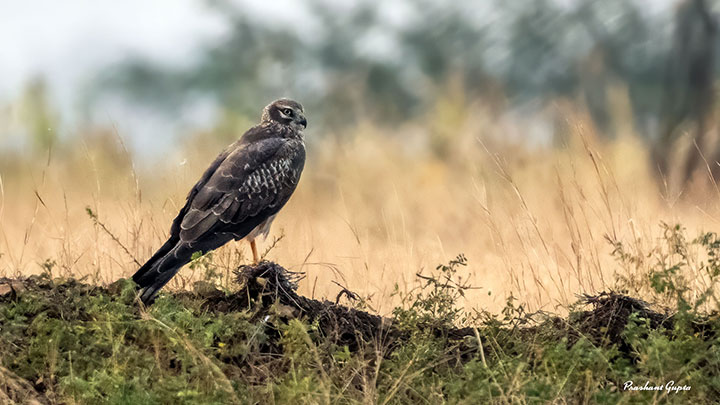
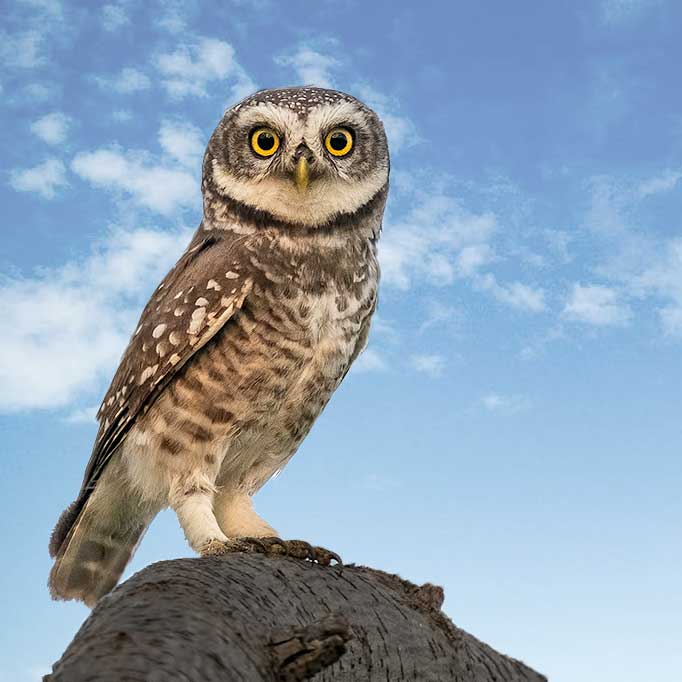
A bird sitting on a distant mound may initially look insignificant. Stop the vehicle, raise the binoculars and suddenly it becomes a raptor surveying the grassland. A tiny movement beside the road may reveal a lark. Something that appears to be a stone could turn its head and reveal an owl.
The grasslands around Bhigwan are particularly interesting for raptors and open-country birds, while the wider landscape also supports mammals such as Indian foxes and, more rarely, Indian wolves and striped hyenas.
That possibility of the unexpected is part of the excitement.
Birding the Grasslands Requires a Different Mindset
Wetland birding can sometimes be generous. Large birds are visible from considerable distances and flocks announce themselves dramatically.
Grassland birding is subtler.
You have to learn to search.
Look at fence posts.
Look at isolated bushes.
Look along power lines.
Scan the tops of small mounds.
Watch the sky.
Then look again.
Raptors frequently reveal themselves first as a distant silhouette. The shape of the wings, manner of flight, length of the tail and behaviour may eventually tell you what you are looking at.
Smaller birds often disappear completely into vegetation until they suddenly rise and perch.
This makes grassland birding enormously satisfying because identification becomes an exercise in observation rather than simply spotting.
A Wonderful Place for Bird Photography
For photographers, Bhigwan offers two very different challenges within a single trip.
At the lake, the opportunities include reflections, birds in flight, feeding behaviour, group formations and environmental compositions. Flamingos taking off can be particularly dramatic as they run across the surface before becoming airborne.
The grasslands demand something else.
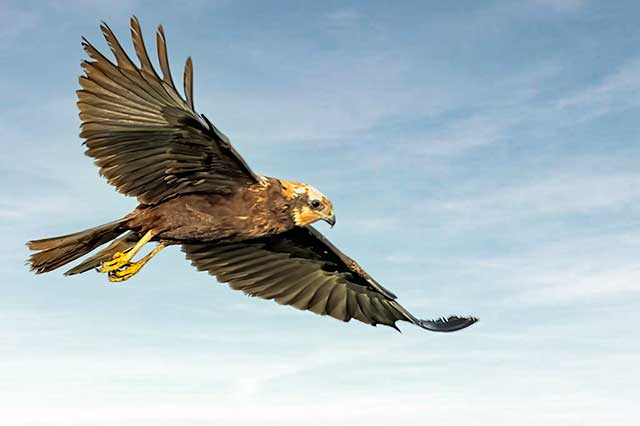
Here backgrounds matter enormously. A raptor photographed against clean, softly coloured grass can look magnificent. Early or late sunlight brings texture into plumage and transforms otherwise ordinary dry grass into a beautiful golden backdrop.
Long lenses are certainly useful, but Bhigwan also rewards restraint.
Instead of always trying to fill the frame, try showing the bird within its habitat.
A harrier sweeping low over grassland, a flamingo flock stretching across the horizon or a lone raptor beneath an enormous sky may communicate far more about the place than another tightly cropped bird portrait.
When Should You Visit?
For most visitors interested in migratory waterbirds and flamingos, winter is the traditional season, roughly from December through February or March, although bird numbers and flamingo presence vary with rainfall, water levels, food availability and migration patterns. Flamingos should therefore be regarded as a wonderful possibility rather than a guaranteed appointment.
Interestingly, Bhigwan is not exclusively a winter destination. Monsoon changes the landscape dramatically, turning dry surroundings green and creating a very different photographic environment for resident and breeding birds.
For a first visit, however, winter offers perhaps the best introduction because it lets you experience both the wetland migration spectacle and productive grassland birding.
A Good Birding Day at Bhigwan
An ideal day begins before sunrise.
Reach the lakeside while the light is still soft and take an early boat ride. Spend the first couple of hours quietly watching the wetland rather than rushing from one bird to another.
Return for breakfast and then explore the surrounding fields and grasslands.
Around midday, bird activity often falls and photographic light becomes harsher. This is a good time to rest.
Head back into the grasslands by mid-afternoon. As the sun drops, raptors often become easier to photograph and the entire landscape takes on warmer colours.
Then stop occasionally and simply watch the horizon.
Bhigwan sunsets can be spectacular, particularly when a bird happens to cross the glowing sky at exactly the right moment.
Binoculars Before Camera
Photography can easily dominate a birding trip, especially when travelling with a long telephoto lens. But Bhigwan is a good place to occasionally put the camera down.
Watch a flamingo feed.
Observe how an egret stalks its prey.
Follow a harrier quartering systematically across a field.
Notice how smaller birds use bushes and fence posts as lookout points.
Photography records the encounter.
Observation helps you understand it.
And once you understand a bird's behaviour, strangely enough, your photographs usually improve as well.
Why Bhigwan Is Worth Returning To
Perhaps the greatest attraction of Bhigwan is its unpredictability.
One trip may belong to flamingos.
Another may be remembered for a spectacular raptor sighting.
On another morning there may be no dramatic rarity at all, yet beautiful light, a perfectly still lake and familiar birds behaving naturally make the visit worthwhile.
That is really what birding is about.
It is not simply collecting species or photographs. It is learning to notice things—the movement of a distant wing, the shape of a bird against the sky, the changing colour of the grass and the extraordinary amount of life hidden within an apparently empty landscape.
At Bhigwan, you can begin the morning surrounded by water and flamingos and end the day watching a raptor disappear across a golden grassland.
Two habitats. Two completely different birding experiences. And one remarkable destination.

0 Comments